Trucking Employment Stays Flat While Warehousing Takes a Hit
Staff
Published August 10, 2026
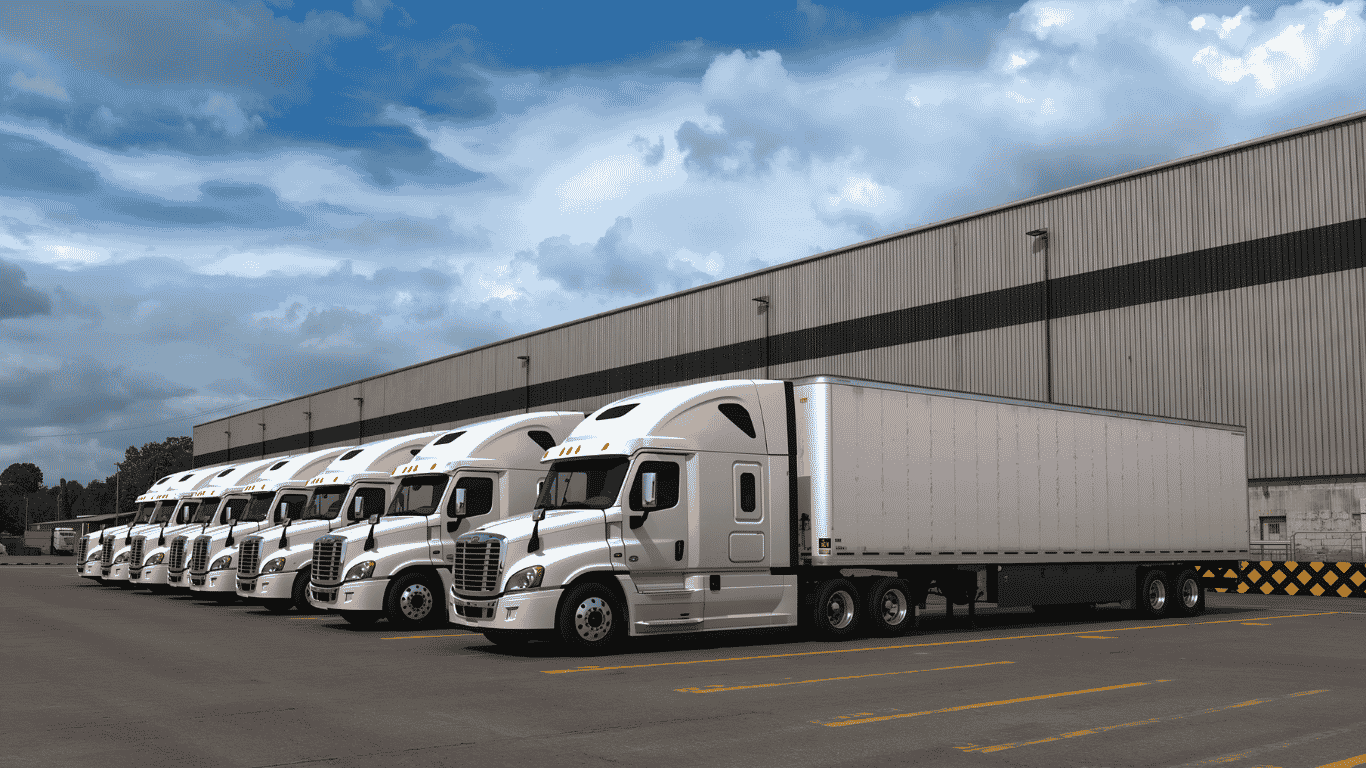

Truck transportation employment returns to February levels as warehouse jobs continue to decline
Employment in truck transportation barely moved in July, with the sector adding just 100 jobs compared with June, according to the latest data from the Bureau of Labor Statistics (BLS). The much bigger change came in warehousing, where employment fell sharply during the month.
The latest monthly jobs report initially appeared to show truck transportation employment declining by 100 positions in July compared with June. However, the picture changed slightly after the BLS revised its previous figures. June’s truck transportation employment estimate was revised downward by 1,500 jobs, while May was adjusted down by another 200 positions.
After those revisions, the overall employment picture in trucking remains remarkably stable.
The BLS reported approximately 1,465,100 truck transportation jobs in February, and July’s employment level came in at exactly the same figure.
That stability stands in contrast to the warehousing sector, which experienced a much more significant decline. Warehouse employment fell by 9,500 jobs in July, bringing the total to approximately 1,834,600 positions.
Although the monthly drop was substantial, it was not the largest decline recorded over the past year. Warehousing employment fell by roughly 16,000 jobs in September 2025 and another 13,500 jobs in October 2025. Compared with July 2025, the sector has now lost approximately 34,700 jobs, representing a decline of about 1.8%.
The numbers suggest that while trucking employment remains relatively resilient, the broader freight and logistics labor market continues to experience uneven conditions.
Changes in freight demand, inventory levels, operating costs and consumer spending are all influencing how transportation companies approach hiring and expansion.
To grow or maintain capacity?
The question facing many carriers is whether current market conditions justify fleet expansion or whether companies should concentrate on strengthening existing operations.
Mazan Danaf, principal economist at Uber Freight, said carriers are actively looking to expand their fleets as spot market rates improve and freight demand strengthens. However, he noted that expanding capacity remains difficult in an environment shaped by a restrictive regulatory landscape.
Danaf also pointed to encouraging developments within specific segments of the trucking industry. Long-distance truckload employment, for example, increased for four consecutive months through June, suggesting that certain parts of the market are beginning to show signs of improvement even as overall employment remains relatively flat.
David Spencer, vice president of market intelligence at Arrive Logistics, offered a more cautious interpretation. He said relatively stable trucking employment alongside higher freight rates indicates that carriers may currently be prioritizing replacement equipment, maintenance and driver pay increases rather than pursuing aggressive fleet growth.
Stay Informed
Get freight market insights delivered to your inbox
Join industry professionals receiving our weekly analysis.
That distinction is important for the trucking industry. Higher rates do not automatically translate into immediate hiring or fleet expansion. Many carriers are still dealing with elevated equipment costs, insurance premiums, fuel expenses and regulatory compliance requirements. For some fleets, improving profitability may currently be more important than adding trucks.
Danaf also emphasized that the trucking labor market remains below its longer-term norm. According to his assessment, truck transportation employment is about 3.2% below its 10-year average, indicating that a complete recovery in available capacity could still take considerable time.
For shippers, this could remain an important factor. If freight demand continues to improve while carriers remain cautious about adding equipment and drivers, available truck capacity could tighten further, potentially putting additional pressure on transportation rates.
Courier jobs rise while warehousing loses momentum
Another transportation-related segment posted a noticeable employment increase in July. Courier and messenger employment climbed to approximately 1,098,000 jobs, up from 1,083,100 in June.
However, the apparent improvement needs to be viewed alongside previous revisions. Independent economist Aaron Terrazas noted that the stronger July figure partly reflects a significant downward revision to the June estimate. The revised June total of 1.083 million jobs is considerably below the original estimate of approximately 1.097 million.
The warehousing data also became less encouraging after revisions. In addition to the July decline, the BLS revised employment figures for both May and June downward. As a result, although July warehouse employment remained above levels recorded during the first three months of the year, the revisions weakened the argument that the sector was experiencing a meaningful summer employment rebound.
The developments highlight the uneven nature of the current freight economy. Trucking employment has remained relatively steady, courier employment has increased, while warehousing continues to lose workers. These differences can reflect changing inventory strategies, distribution patterns, consumer demand and the ongoing evolution of the U.S. supply chain.
Spencer expects the environment to remain challenging for significant capacity growth in truck transportation. He pointed to high fuel prices and an evolving regulatory environment as continuing obstacles for carriers.
Regulatory enforcement is also becoming an increasingly important consideration for trucking companies and professional drivers. Recent developments, including the Supreme Court ruling involving broker liability, add another layer of uncertainty for carriers operating in an already demanding business environment.
Spencer also identified commercial insurance costs and availability as major concerns, along with safety ratings. Rising insurance expenses can make it more difficult for smaller carriers to remain competitive, while stricter safety requirements can further limit the number of trucks and drivers available to the market.
Taken together, these pressures could continue to constrain trucking capacity in the months ahead, even if freight demand improves.
Rail employment continues to slide
The weakness was not limited to trucking and warehousing. Rail transportation employment was also revised lower for both May and June, while July employment declined by another 400 positions to approximately 149,300 jobs.
Monthly changes in rail employment are generally modest, but the longer-term trend is more significant. Rail transportation employment is now approximately 5,100 jobs below its level a year earlier, representing a decline of about 3.2%.
Meanwhile, average hourly earnings for production and nonsupervisory employees in truck transportation increased slightly to $32.35 in June, according to the BLS data, which is reported with a one-month lag. Despite the increase, the figure remained slightly below April's $32.38 average.
For trucking companies, wage trends remain an important part of the broader capacity equation. Driver compensation, equipment replacement and operating expenses all influence whether carriers choose to expand, maintain their current fleets or focus on improving efficiency.
Overall, the latest employment data paints a mixed picture of the U.S. transportation and logistics industry. Trucking employment remains remarkably stable, but warehousing and rail continue to show signs of weakness. At the same time, improving freight rates in some segments could encourage carriers to increase capacity provided that regulatory pressure, fuel prices, insurance costs and equipment expenses do not offset the potential gains.
For the trucking market, the key question is no longer simply whether freight demand will recover. It is whether carriers will have the financial flexibility and operating capacity to respond when that demand arrives.