Lawmakers Move to Shield ELDs from Foreign Manipulation
Staff
Published June 25, 2026

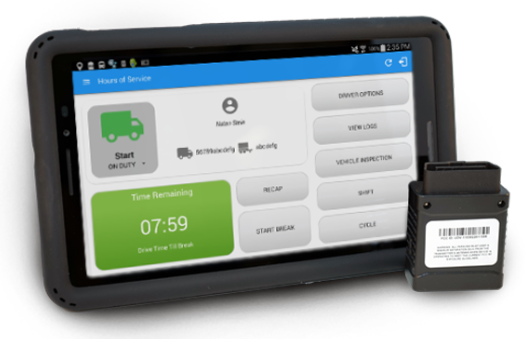
A new legislative push in Washington is taking direct aim at a critical vulnerability in the American supply chain: the remote tampering of electronic logging devices (ELDs). Introduced by two Republican members of the House of Representatives, the proposed bill seeks to slam the door on what lawmakers call a dangerous regulatory loophole allowing overseas personnel to alter U.S. truck drivers' hours-of-service (HOS) records.
The Genesis of the GHOSTRUCK Act
The legislative effort is spearheaded by Representatives Greg Steube of Florida and Dave Taylor of Ohio. Congressman Taylor’s involvement carries significant weight, given his dual roles as a member of the House Transportation and Infrastructure Committee and the chairman of the Congressional Trucking Caucus.
Together, the lawmakers have introduced the Guarding Hours-of-Service Oversight and Stopping Tampering by Remote Unofficial Carrier Keeper Act cleverly designated as the GHOSTRUCK Act.
The core mission of the bill is to eliminate a glaring blind spot in current federal transport laws. As the law stands, there is no explicit prohibition preventing foreign-based dispatchers from accessing, editing, or making annotations to the electronic logs that monitor American truckers.
Out of Sight, Beyond the Law
The GHOSTRUCK Act gained rapid momentum following a high-profile 60 Minutes investigative report by CBS News, which shone a harsh spotlight on the shadowy world of "chameleon carriers." These are illicit trucking operations that shut down under one name to evade fines or safety violations, only to immediately reincarnate under a fresh DOT number.
Stay Informed
Get freight market insights delivered to your inbox
Join industry professionals receiving our weekly analysis.
A central focus of that investigation involved foreign-based management manipulating American driver logs from thousands of miles away. The broadcast featured a recorded conversation between U.S. truck driver Daniel Sanchez and a remote dispatcher based in Serbia. Even though Sanchez had exhausted his legal 11-hour driving limit, the overseas dispatcher assured him, "we can fix your clock." With the simple click of a button, foreign managers are able to reset federally mandated time clocks, fabricating a fresh set of hours and forcing drivers to stay on the road while fatigued. Because these dispatchers operate outside U.S. borders, they remain insulated from local law enforcement and FMCSA accountability measures. While log edits are legally necessary at times for legitimate corrections, such as documenting fuel stops or mandatory rest breaks the current system leaves the door wide open for systemic, unpunished coercion.
Industry Powerhouses Rally in Support
The GHOSTRUCK Act has quickly galvanized the commercial transport sector, securing strong backing from major trucking advocacy groups who argue that log integrity is paramount to both driver safety and fair market competition.
The American Trucking Associations (ATA) has thrown its full weight behind the bill. Alex Rosen, the ATA's senior vice president of legislative affairs, emphasized that highway safety relies entirely on a level playing field and consistent HOS compliance. He warned that the rising tide of electronic log tampering severely undermines law enforcement, compromises public safety, and unfairly rewards bad actors who bypass the rules.
Concurrently, the Owner-Operator Independent Drivers Association (OOIDA) has voiced enthusiastic support for the legislation. OOIDA President and CEO Todd Spencer praised the bill for targeting illicit interference from bad actors operating out of Eastern Europe and Asia.
Crucially, Spencer highlighted a key driver-protection mechanism built into the GHOSTRUCK Act: the legislation guarantees that the truck driver retains absolute, final approval over any edits suggested by a motor carrier. This vital safeguard ensures that American truckers remain the ultimate stewards of their own logs, protecting them from carrier coercion and keeping U.S. highways safer.
Understanding the Broader Impact: The "Chameleon" Crisis
The GHOSTRUCK Act arrives at a time when the Federal Motor Carrier Safety Administration (FMCSA) is under intense pressure to modernize its enforcement tools. Chameleon carriers frequently utilize remote dispatch services to hide their safety history, leading to severe safety risks. By criminalizing or blocking the unauthorized foreign manipulation of ELD software, this bill represents a major step toward closing the digital borders of U.S. transportation and restoring integrity to the supply chain.