Battery Swapping Opens a New Path to Electric Trucking
Staff
Published October 1, 2026
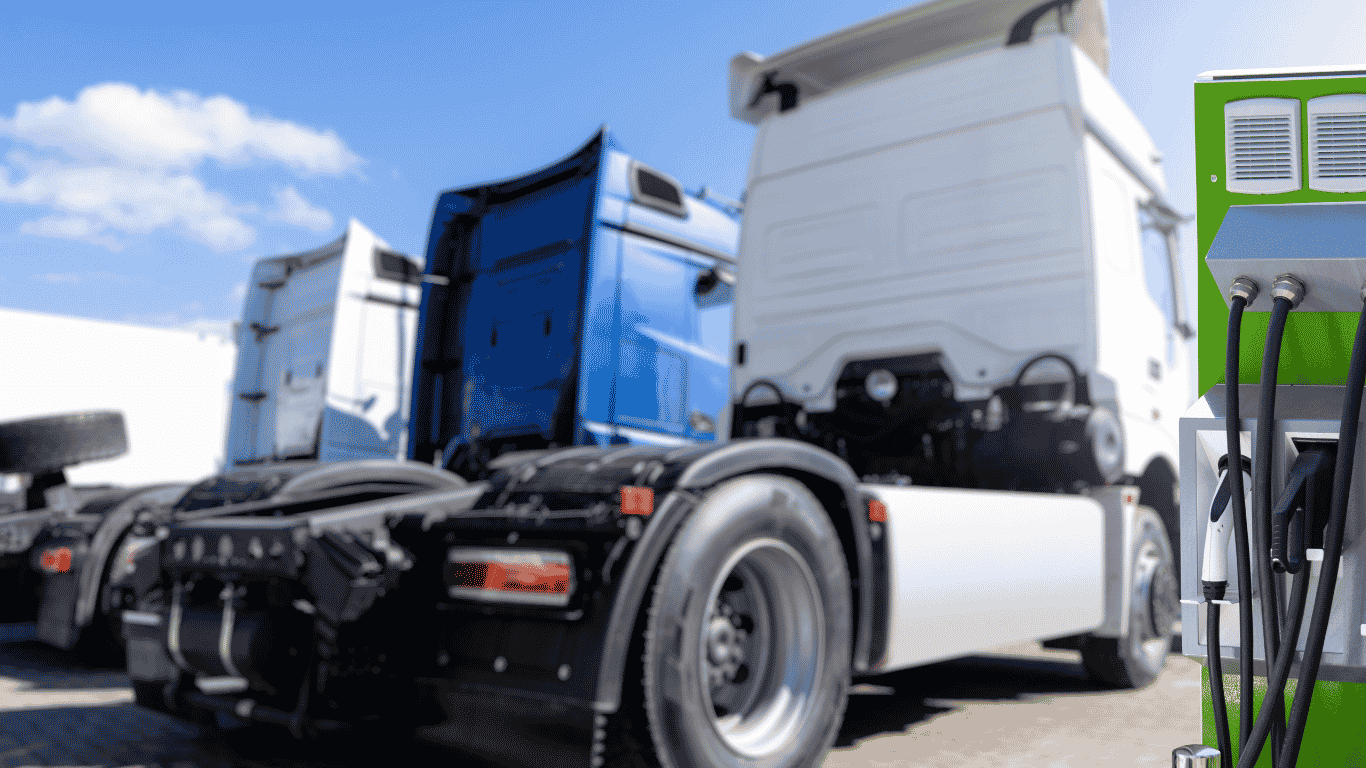

Battery-swapping technology is giving fleets another path to electrification by allowing existing Class 8 tractors to be converted instead of replaced.
For fleets operating in areas such as Southern California, the transition from diesel to electric is taking a different form. Rather than purchasing an entirely new battery-electric tractor, some operators are converting existing diesel trucks into electric vehicles and pairing them with battery systems that can be exchanged in minutes.
The approach is gaining attention because downtime remains one of the biggest operational challenges associated with electric heavy-duty trucks. Instead of keeping a truck parked while its battery charges, a swap-capable vehicle can exchange a depleted battery for a fully charged one and return to work.
That creates a different operating model from conventional battery-electric trucks. For example, the Tesla Semi offers a claimed range of up to 500 miles, while Tesla says its Megacharger can restore about 60% of that range in 30 minutes. Battery swapping takes a different approach: rather than waiting for energy to be transferred into the battery installed in the truck, the vehicle receives a charged battery that has already been prepared for use.
The concept could be particularly relevant to high-utilization fleets, where every hour a truck spends out of service can affect schedules, driver productivity and asset utilization.
Ability Tri-Modal Transportation Services has provided an example of how the technology can work in day-to-day operations. The company has adapted Class 8 tractors to Janus Electric technology, allowing batteries to be exchanged in approximately four minutes.
Executive Vice President Mike Kelso described the process as eliminating significant dwell time. Additional charging infrastructure can recharge the batteries in roughly three hours, according to the company.
The conversion process also changes the economics of fleet electrification. Instead of purchasing a completely new electric tractor, the existing diesel truck is retained while its conventional powertrain is replaced with an electric powertrain. The fuel tanks are removed and replaced with battery storage equipment.
According to Kelso, the conversion costs approximately $175,000 before incentives. California's Clean Truck and Bus Voucher Incentive Project (HVIP) can provide eligible fleets with up to $112,000 toward the conversion, bringing the reported net cost to approximately $40,000 to $50,000.
That difference is significant for fleet operators evaluating the cost of transitioning to zero-emission equipment. Reusing an existing Class 8 tractor can potentially reduce the capital requirement associated with replacing an entire vehicle, while also giving an older asset a new operating life.
“We’re able to reuse the existing assets, the Class 8 tractors, by converting them to battery electric,” Kelso said.
The concept is also expanding beyond a single fleet or market. Janus Electric has been increasing its presence in California and Texas, while its U.S. and Canadian order book reached 118 as of late August. The company’s model combines the electric powertrain conversion with a network of swappable batteries and charging infrastructure, creating an alternative to conventional fixed-battery charging.
Stay Informed
Get freight market insights delivered to your inbox
Join industry professionals receiving our weekly analysis.
Battery swapping is still an early-stage technology in the United States, but the idea has already been deployed on a much larger scale in China. Research from the American Council for an Energy-Efficient Economy found that battery swapping can reduce charging-related downtime and extend the operational range of medium- and heavy-duty vehicles. The organization also noted that research and deployment in the United States remain relatively limited compared with China.
That international experience is important because heavy-duty trucking places very different demands on batteries than passenger vehicles do. Trucks may travel hundreds of miles per day, carry substantial payloads and operate on schedules where long charging stops can complicate dispatch planning. A swap model could separate the truck's operating time from the battery's charging time, allowing batteries to charge while the truck remains on the road.
Infrastructure, however, remains a critical part of the equation. Battery-swapping networks require strategically located stations, additional batteries, charging capacity and standardized equipment. Fleets also need to consider route density, daily mileage, vehicle utilization and where their trucks regularly operate before determining whether swapping makes operational sense.
Other heavy-duty electric tractors are also beginning to gain momentum in the United States. In September, a coalition of major shippers announced a 2,500-unit order for battery-electric Class 8 trucks through the Zero-Emission Truck Shipper-Carrier Alliance Leading Electrification, or ZET SCALE, program. Smart Freight Centre and Catalyst Mobility said the order could nearly double the U.S. electric Class 8 fleet.
The development illustrates that fleet electrification is no longer limited to small demonstration projects. At the same time, the U.S. market remains relatively small compared with the global zero-emission heavy-duty market. According to the International Council on Clean Transportation, global zero-emission medium- and heavy-duty vehicle sales exceeded 520,000 units in 2025, with China accounting for about 88% of the total.
China's market included approximately 232,000 zero-emission heavy-duty trucks, demonstrating how quickly electric heavy transport can scale when vehicle availability, infrastructure and market conditions align.
China's experience also highlights one of the potential advantages of battery swapping: infrastructure can be developed around predictable freight corridors. Where large numbers of trucks repeatedly travel the same routes, strategically positioned swap stations can serve multiple vehicles and reduce the need for every truck to remain connected to a charger for extended periods.
In the United States, however, fleets are likely to face a more varied infrastructure landscape. Depot charging, public charging corridors, private charging stations and battery-swapping facilities may all become part of the market. Large fleet depots can require substantial electrical capacity, sometimes making utility upgrades and grid planning just as important as the trucks themselves.
Government incentives are another factor influencing the economics of these projects.
Programs such as California's HVIP have helped reduce the upfront cost of qualifying zero-emission vehicles and conversions, even as the federal funding environment for clean transportation has changed. As incentives evolve, fleet operators are increasingly likely to evaluate electrification through total cost of ownership, including vehicle acquisition, energy, maintenance, infrastructure, utilization and residual value.
For trucking companies, the central question may therefore become less about choosing one technology for every operation and more about matching the right powertrain to the right duty cycle.
Battery-electric trucks may work particularly well for predictable regional routes, while battery swapping could offer an additional solution for fleets that need high utilization without lengthy charging stops. Diesel equipment will continue to serve applications where charging infrastructure, range or operating conditions make electrification more difficult, while hydrogen and other technologies may develop in specific heavy-duty applications.
As IMC Logistics Chief Commercial Officer Brian Kobza recently noted, the future of trucking is likely to involve a mix of diesel, electric and hydrogen technologies, with the appropriate solution depending on the operating model, charging or fueling network and financial support available.
For fleet operators, that means the transition to lower-emission trucking does not necessarily have to begin with replacing every truck in the yard. Converting existing assets, improving infrastructure and choosing technology according to the route and utilization profile could become an increasingly important part of the industry's electrification strategy.
Battery swapping remains a developing market in the United States, but its appeal is straightforward: keep the truck moving, reduce charging downtime and potentially extend the useful life of an existing Class 8 asset. As more fleets test the model and infrastructure expands, the industry will get a clearer picture of where battery-swapping technology can deliver the greatest operational and financial value.