Nearshoring Remains Strong Despite Tariffs and Global Uncertainty
Staff
Published June 2, 2026
Supply Chains Adapt Through Cross-Border Innovation and Greater Flexibility
Despite ongoing tariff changes, geopolitical tensions, and economic uncertainty, nearshoring continues to reshape North American supply chains, reinforcing its position as one of the most significant logistics trends of the decade.
Companies are increasingly relocating manufacturing and sourcing operations closer to their end markets, and the United States continues to see growing trade activity with Mexico. Since the disruptions caused by the COVID-19 pandemic, businesses have accelerated efforts to shorten supply chains, improve resilience, and reduce dependence on distant overseas suppliers.
Mexico surpassed China as America's largest trading partner in 2023, and recent trade data shows that momentum has continued, with Mexico accounting for a significant share of U.S. trade activity in 2026.
According to industry experts, nearshoring is no longer a temporary response to supply chain disruptions it has become a long-term structural transformation.
Cross-Border Freight Demand Continues to Grow
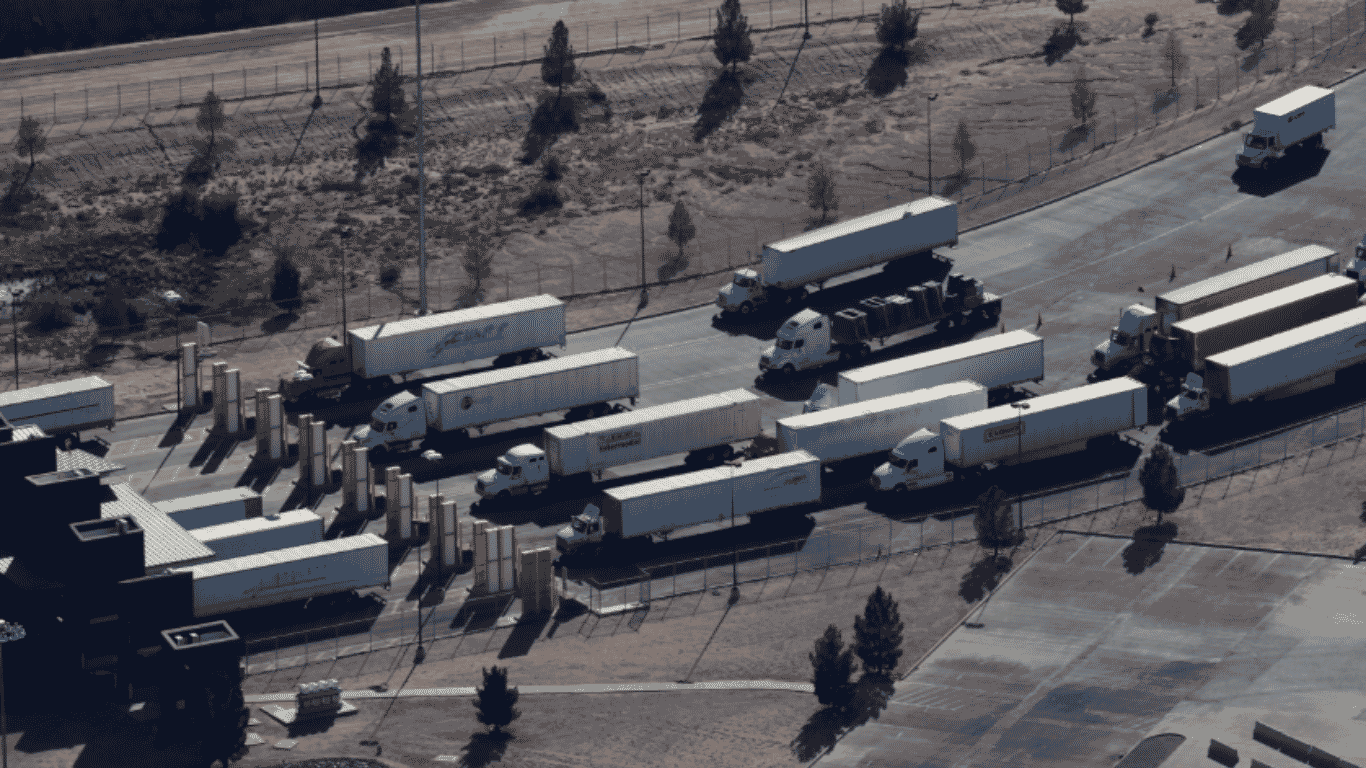
Major freight gateways such as Laredo, Texas, remain critical hubs for cross-border commerce, with demand for transportation services staying strong despite a more challenging operating environment.
Shippers today face a combination of rising fuel costs, evolving tariff regulations, driver shortages, and increased enforcement around international freight movements. In response, many companies are redesigning their logistics strategies to create more adaptable and efficient supply chains.
Businesses are increasingly embracing border transloading operations, consolidating freight within Mexico before export, and developing contingency plans that provide greater flexibility when market conditions change.
At the same time, transportation capacity is becoming concentrated among carriers and logistics providers with strong compliance programs, reliable operations, and proven cross-border expertise.
As a result, supply chain visibility, regional knowledge, and dependable carrier partnerships have become strategic advantages rather than operational conveniences.
Manufacturing Shifts Are Driving More Truck Freight
Industry analysts continue to observe a gradual shift away from Chinese imports and toward Mexican manufacturing.
Much of this growth comes from companies sourcing products from existing manufacturers already operating in Mexico. At the same time, a growing number of organizations are making longer-term investments to relocate production from Asia into North America.
This transition is creating a significant shift in freight flows, moving transportation demand away from ocean shipping and toward land-based transportation networks.
For the trucking industry, this trend represents a major opportunity. As freight increasingly moves along North American trade corridors, truck transportation becomes the backbone connecting manufacturing facilities, distribution centers, border crossings, and end customers.
The increased volume is also placing greater pressure on critical infrastructure, particularly at major border crossings and along heavily traveled freight routes such as Interstate 35.
Tariff Strategy and Transportation Strategy Are Now Connected
Recent supply chain analysis shows that businesses are no longer making transportation decisions based solely on freight rates and transit times.
Instead, logistics planning is becoming closely tied to tariff exposure, policy risks, and supply chain flexibility.
Although customs entry volumes have declined in some areas, shipment values have increased significantly, suggesting that companies are consolidating freight, optimizing shipments, and becoming more strategic rather than reducing trade activity altogether.
Stay Informed
Get freight market insights delivered to your inbox
Join industry professionals receiving our weekly analysis.
This shift highlights a new reality: transportation has become a key component of risk management.
Companies are evaluating not only how goods move but also how logistics decisions can help mitigate the financial impact of changing trade policies and tariffs.
Trucking Emerges as a Major Beneficiary
Among all transportation modes, trucking has become one of the biggest beneficiaries of nearshoring and supply chain redesign.
Shorter supply chains provide several important advantages in today's uncertain trade environment. They allow businesses to reposition inventory more quickly, react faster to market changes, and reduce exposure to disruptions associated with long ocean transit times.
As manufacturers and retailers move production and inventory closer to customers, trucking plays a critical role in supporting faster replenishment cycles and maintaining supply chain resilience.
The ability to move freight rapidly across regional networks has transformed trucking from a transportation service into a strategic business asset.
Distribution Networks Continue to Evolve
Many global brands are rethinking traditional distribution models that relied heavily on U.S.-based warehouses serving international markets.
Rising tariffs, increasing duties, and higher transportation expenses are encouraging companies to place inventory directly into regional markets instead of routing products through the United States.
This approach helps businesses lower costs while reducing tariff exposure and unnecessary cross-border movements.
As a result, freight patterns are changing.
Some traditional transportation lanes are experiencing reduced activity, while regional distribution networks and cross-border corridors continue to gain importance.
Higher fuel prices are accelerating these adjustments, prompting companies to eliminate unnecessary transportation steps wherever possible.
Nearshoring Is a Long-Term Trend
While recent tariff developments have attracted attention, economists emphasize that nearshoring did not begin with recent trade disputes.
Many experts trace the trend back to the aftermath of the 2008 financial crisis, when companies first began reassessing the risks associated with extended global supply chains.
Over time, concerns about geopolitical instability, supply chain disruptions, and dependence on overseas production have strengthened the business case for locating manufacturing closer to North American consumers.
Although some organizations may delay major investments until future trade agreements become clearer, industry observers expect the broader nearshoring movement to continue expanding.
Long-term uncertainty surrounding trade relationships with China and other Asian markets remains a powerful driver behind manufacturing relocation decisions.
Border Corridors Experience Sustained Growth
The impact of nearshoring is particularly visible across key U.S.-Mexico freight corridors.
Many of the busiest border crossings have experienced dramatic freight growth over the past decade, and cargo volumes continue to rise as companies increase their investments in North American production and distribution networks.
This sustained growth is creating new opportunities for carriers, brokers, warehouse operators, and logistics providers specializing in cross-border transportation.
Resiliency Is Becoming More Important Than Lowest Cost
Supply chain experts increasingly view today's transformation as a permanent restructuring rather than a temporary reaction to tariffs or economic uncertainty.
Companies are redesigning logistics networks around three core priorities: resilience, proximity, and flexibility.
Mexico is playing a larger role than ever in manufacturing, sourcing, and distribution strategies, while businesses place greater value on predictable transit times, inventory visibility, operational continuity, and dependable transportation capacity.
Years of disruptions from tariffs and port congestion to geopolitical conflicts, have exposed the vulnerabilities of supply chains focused exclusively on minimizing costs.
As a result, organizations are prioritizing reliability and service consistency alongside efficiency.
Strategic Facilities Gain Importance
The growth of nearshoring is also increasing demand for logistics infrastructure located near major trade corridors.
Warehouses and distribution facilities capable of supporting transloading, overflow storage, inventory buffering, and rapid replenishment programs are becoming increasingly valuable.
As cross-border freight volumes grow, companies need logistics partners that can manage operational complexity while maintaining visibility and flexibility throughout the supply chain.
For trucking and logistics providers, this evolving landscape presents significant opportunities. Businesses that invest in cross-border expertise, technology, strategic partnerships, and regional infrastructure will be best positioned to capitalize on the continued expansion of North American trade.
Nearshoring has proven resilient despite tariffs, geopolitical uncertainty, and shifting trade policies. Rather than slowing down, companies are adapting by creating more flexible, regionalized, and resilient supply chains. For the trucking industry, the trend continues to generate growing freight demand, stronger cross-border trade flows, and new opportunities across North America's most important logistics corridors.