Canada Cancels Joint Gordie Howe Bridge Opening Ceremony as U.S. Tariff Dispute Intensifies
Staff
Published July 23, 2026
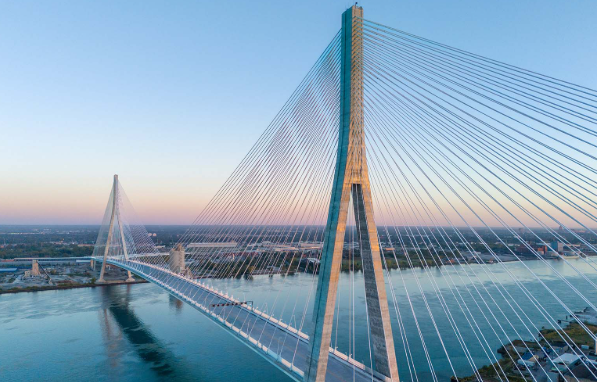
A planned joint U.S.-Canada ceremony marking the opening of the Gordie Howe International Bridge, which links Detroit, Michigan, and Windsor, Ontario, has been canceled after President Donald Trump announced a 50% tariff on most Canadian imports. While the bridge is still expected to open to traffic, the growing trade dispute has cast uncertainty over what should have been a major milestone in North American transportation and cross-border commerce.
Tariff Announcement Disrupts Bridge Celebration
The official opening ceremony, originally scheduled as a joint event on July 24, will no longer be held as planned. Canadian officials said the decision followed the U.S. administration's announcement of new tariffs targeting a wide range of Canadian goods, including products from key industries.
President Trump stated that Canada has unfairly treated U.S. exports, particularly in the automotive, dairy, and alcohol sectors, prompting the latest round of trade measures. The move has added fresh tension to the long-standing economic partnership between the two neighboring countries.
According to Canadian Infrastructure Minister Gregor Robertson's office, proceeding with a joint celebration would be inappropriate while new trade restrictions are being threatened. Instead, Canada plans to hold its own ceremony, while it remains uncertain whether U.S. officials will organize a separate event.
Bridge Opening Still Expected Despite Political Tensions
Although the ceremonial plans have changed, officials on both sides of the border continue working toward opening the Gordie Howe International Bridge to traffic on July 27.
The project had already experienced delays earlier this year after U.S. and Canadian authorities worked through several unresolved operational and administrative issues. An earlier ribbon-cutting event scheduled for June was postponed while both governments finalized remaining agreements.
Canadian officials reaffirmed their commitment to launching the bridge as planned, emphasizing its importance to transportation, trade, and economic growth.
A Landmark Infrastructure Project
Stretching approximately 1.5 miles across the Detroit River, the Gordie Howe International Bridge will become one of the most significant border crossings between the United States and Canada.
Stay Informed
Get freight market insights delivered to your inbox
Join industry professionals receiving our weekly analysis.
The nearly $4.4 billion infrastructure project has been under construction since 2018 and was financed by the Canadian government under an agreement allowing construction costs to be recovered through future toll revenues. However, the current U.S. administration has pushed for changes to that financial arrangement, creating another point of disagreement during negotiations.
Named after legendary Canadian hockey player Gordie Howe, who spent much of his career with the Detroit Red Wings, the bridge is expected to strengthen one of North America's busiest trade corridors.
Trade Dispute Raises New Questions
The latest tariff announcement follows months of political disagreements between Washington and Ottawa.
Earlier this year, President Trump publicly suggested that the United States should receive a significant ownership stake in the bridge as part of broader negotiations with Canada. While discussions continued, both governments had recently reached an agreement that cleared the way for the bridge's opening.
Now, the newly proposed tariffs have reopened trade tensions. The White House indicated the measures would take effect in 30 days, leaving room for additional negotiations before implementation.
Canadian Prime Minister Mark Carney reiterated his government's support for free and fair trade, while expressing willingness to continue discussions with the United States in hopes of reaching a mutually beneficial solution.
At the same time, Ontario Premier Doug Ford argued that if the tariffs move forward, Canada should respond with equivalent countermeasures, signaling that both countries may be heading toward another round of trade retaliation.
What This Means for the Trucking Industry
For the trucking industry, the opening of the Gordie Howe International Bridge remains highly significant despite the political dispute. The crossing is expected to improve cross-border freight efficiency, reduce congestion at existing border crossings, and provide carriers with an additional route through one of the busiest freight corridors in North America.
However, the proposed 50% tariffs introduce new uncertainty for fleets that regularly transport goods between the United States and Canada. Higher import costs could reduce shipping volumes for affected products, increase transportation expenses, and force shippers to adjust supply chains or renegotiate contracts.
Cross-border carriers may also experience shifting freight demand as manufacturers and distributors respond to changing trade policies. Industries such as automotive manufacturing, agriculture, food and beverage, and industrial goods, which generate substantial truck traffic between both countries, could be particularly affected if tariffs remain in place.
Despite these concerns, the new bridge represents a major long-term investment in North American freight transportation. Once fully operational, it is expected to enhance border capacity, improve supply chain reliability, shorten transit times, and support continued growth in cross-border trucking for years to come.
As trade negotiations continue, trucking companies, freight brokers, shippers, and logistics providers will be closely monitoring both the implementation of the new tariffs and the successful opening of this critical transportation corridor.