Amazon Enters the LTL Arena, But Industry Experts See Limited Immediate Impact
Staff
Published June 11, 2026
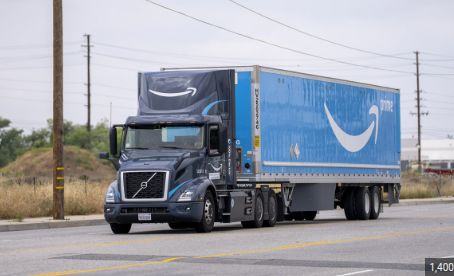

Amazon’s Expansion Sparks Attention Across the LTL Sector
Amazon’s latest move into the less-than-truckload (LTL) market generated headlines throughout the transportation industry and briefly pressured shares of publicly traded LTL carriers. While transportation stocks declined modestly following the announcement, industry analysts largely view the development as a manageable competitive shift rather than a disruptive threat.
The market reaction was relatively restrained, especially considering that LTL stocks have posted strong gains this year amid growing signs of a freight market recovery. Most experts believe Amazon’s current offering lacks the infrastructure and network depth necessary to challenge established national LTL providers in the near term.
Analysts Question Amazon’s Ability to Replicate Traditional LTL Networks
Amazon has been providing inbound LTL services in the United States for more than a year, following a similar strategy that has been operating successfully in Europe. The company’s expanded U.S. service leverages an asset-light transportation model, utilizing approximately 30 facilities within its existing logistics ecosystem.
However, traditional LTL carriers operate highly sophisticated hub-and-spoke networks designed specifically for handling palletized freight, often requiring hundreds of strategically located service centers nationwide. These networks are built to move heavier shipments efficiently while meeting strict transit-time and service expectations.
According to transportation analysts, Amazon’s current footprint resembles a brokerage-style operation more than a fully integrated nationwide LTL carrier.
Industry observers note that while Amazon possesses enormous financial resources and logistics expertise, building a true national LTL network requires far more than capital alone. Decades of operational experience, specialized facilities, advanced routing systems, and established customer relationships remain critical competitive advantages for incumbent carriers.
A Targeted Strategy Rather Than a Full-Scale Assault
Many analysts believe Amazon is pursuing a selective strategy focused on specific freight segments rather than attempting to compete head-to-head across the entire LTL market.
The company may be seeking to maximize utilization of existing transportation assets while targeting freight that is less sensitive to premium service requirements. By leveraging excess network capacity, Amazon can potentially offer competitive pricing without immediately investing billions into a dedicated nationwide terminal system.
Some transportation experts suggest Amazon's service is best positioned to compete within the economy LTL segment, where transit times are typically more flexible and customers prioritize cost efficiency over expedited delivery.
As a result, Amazon could gradually capture limited market share from traditional providers without triggering significant customer migration or major disruption throughout the industry.
Amazon Unveils Expanded LTL Service for Businesses Nationwide
Amazon Supply Chain Services (ASCS) recently announced the nationwide expansion of its LTL offering, making the service available to businesses of all sizes across major U.S. markets.
The service is designed for shipments ranging from single pallets to larger multi-pallet freight movements, allowing businesses greater flexibility when shipping quantities that do not require a full truckload.
Customers can arrange next-day live pickups, utilize same-day drop-trailer options, and schedule recurring pickups for higher-volume operations. Amazon also offers modern digital tools including real-time shipment visibility, electronic data interchange (EDI) integration, automated invoicing, and shipment management technology.
Stay Informed
Get freight market insights delivered to your inbox
Join industry professionals receiving our weekly analysis.
These capabilities align with Amazon’s broader strategy of simplifying logistics through technology-driven solutions that improve visibility and operational efficiency.
Building on Years of Freight Experience
Although Amazon’s public rollout appears new, the company has been handling palletized freight within its network for years.
Previously, Amazon’s LTL operation focused primarily on inbound shipments destined for its fulfillment centers, where freight was broken down and distributed through its parcel network. More recently, the company explored opportunities to provide a more traditional LTL service that keeps palletized shipments intact throughout transportation and delivery.
Amazon executives indicate that strong customer demand helped accelerate the broader launch.
According to company leadership, shippers increasingly sought the same level of reliability, transparency, and technology integration that they experience with full truckload shipments. The expanded service aims to bridge that gap by offering enhanced visibility, flexible pickup options, and dedicated LTL transportation expertise.
The initiative also follows Amazon’s broader effort to consolidate its third-party logistics capabilities under the Amazon Supply Chain Services brand, creating a unified platform that includes transportation, warehousing, fulfillment, distribution, and parcel delivery services.
Today, Amazon Freight manages an extensive transportation operation that includes full truckload, LTL, and intermodal services, supported by more than 80,000 trailers and 24,000 intermodal containers.
Why the LTL Market Remains Difficult to Disrupt
Despite Amazon’s size and resources, the LTL industry remains one of the most challenging transportation sectors to enter successfully.
The market is dominated by a relatively small group of national carriers that have spent decades building extensive terminal networks, optimizing freight flows, and refining service performance.
Creating a competitive LTL operation requires significant investment in cross-dock facilities, specialized equipment, technology platforms, and highly experienced operational leadership. Maintaining consistent service quality across thousands of daily shipments presents an additional challenge that cannot be solved through capital investment alone.
Successful LTL providers have traditionally reinvested profits into service improvements, creating a cycle where stronger performance attracts more freight, which in turn generates additional capital for network expansion and enhancement.
Industry surveys consistently show that service quality remains one of the most important factors influencing shipper decisions. Companies that rely heavily on third-party transportation providers often face greater difficulty controlling service consistency and pricing, which can limit their ability to compete with asset-based carriers.
Some Experts See Long-Term Disruption Potential
Not all analysts are dismissing Amazon’s ambitions.
Some industry observers argue that Amazon’s history demonstrates an ability to enter established markets, refine its operating model, and gradually build meaningful market share over time.
Even without immediately matching the service levels of leading LTL carriers, Amazon could attract customers through competitive pricing, advanced technology, and a flexible logistics platform. If successful, this approach could challenge long-held assumptions about the importance of terminal density and legacy infrastructure as barriers to entry.
While the company’s current market presence remains relatively small, its long-term potential continues to be closely watched throughout the transportation sector.
Competition in the LTL Industry Continues to Intensify
Amazon’s expansion arrives at a time when the competitive landscape of the LTL market is already evolving rapidly.
FedEx Freight, the nation’s largest LTL carrier, recently completed its separation from FedEx Corporation and is aggressively pursuing freight growth through an expanded sales force and extensive terminal network.
Meanwhile, Walmart has enhanced its freight consolidation programs, helping suppliers combine multiple LTL shipments into more efficient full truckload movements destined for regional distribution centers.
Knight-Swift Transportation has steadily expanded its LTL presence since acquiring AAA Cooper Transportation, adding new terminals and strengthening regional coverage through additional acquisitions and network growth.
At the same time, TFI International continues pursuing a strategy focused on building a stronger LTL-centric business model while improving profitability across its U.S. operations.
These developments demonstrate that competition within the LTL sector extends far beyond Amazon, as major transportation providers invest heavily to capture market share and prepare for the next freight cycle.
For now, most transportation analysts believe Amazon’s expanded LTL offering represents an interesting evolution of its logistics business rather than an immediate threat to established carriers.
The company’s technology, financial strength, and logistics expertise give it significant long-term potential. However, the high barriers to entry, extensive infrastructure requirements, and service-driven nature of the LTL market continue to favor experienced operators with mature nationwide networks.
While Amazon may gradually carve out a position in select freight segments, industry experts largely agree that the traditional LTL market remains firmly in the hands of established carriers for now.